
Blog
María Cano Cali Campus Leads Training Strategy for Community Leaders in Valle del Cauca
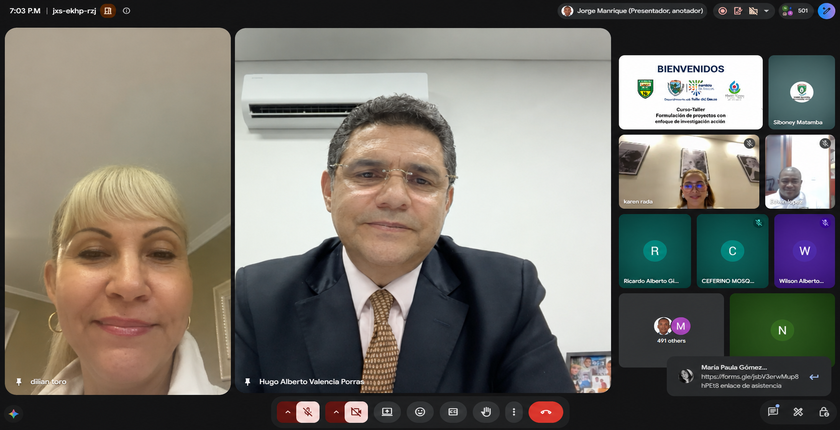
Fundación Universitaria María Cano’s Cali Campus played a leading role in the official launch of “Community Dialogues, Leaderships that Transform,” a strategy promoted by the Government of Valle del Cauca through the Community Action Subsecretariat, part of the Department of Development, Inclusion, and Social Participation.
The launch event was held virtually and brought together more than 500 participants connected simultaneously, with live streaming through YouTube. The audience included community leaders, representatives of Community Action Boards (JAC), local government officials, and delegates from other regions of the country interested in strengthening community leadership and territorial development.
The event was attended by Valle del Cauca Governor, Dr. Dilian Francisca Toro Torres, who officially launched the strategy, alongside Dr. Karen Rada Ramírez, Secretary of Development, Inclusion, and Social Participation. Also participating were Dr. Edwin López Arce, Community Action Subsecretary, and the presidents of the Community Action Federations of Santiago de Cali and Valle del Cauca. Representing Fundación Universitaria María Cano, Rector Dr. Hugo Alberto Valencia Porras delivered opening remarks, reaffirming the institution’s commitment to social and community development across the department.
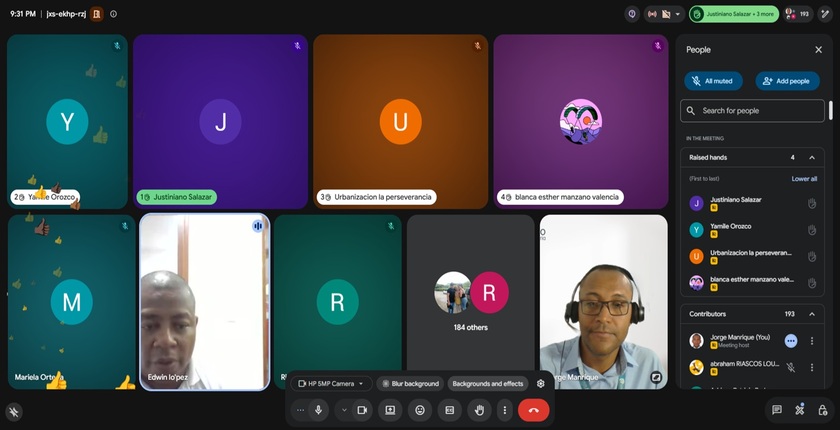
At the heart of the initiative is the academic course-workshop “Project Formulation with the Support of Artificial Intelligence,” designed and led by Dr. Jorge Eliecer Manrique Julio, professor at María Cano’s Cali Campus. During the launch, Professor Manrique Julio presented the workshop methodology, which aims to provide community leaders from Community Action Boards (JAC and JAL) with practical tools to structure, write, and successfully present community projects to potential funding organizations.
The course is organized into four synchronous virtual modules covering the entire project development process, from identifying community challenges and defining objectives to planning activities, preparing budgets, and writing final project proposals. A distinctive feature of the program is the incorporation of artificial intelligence tools to support writing, organization, and project design processes, addressing a key need among community leaders: transforming local challenges into technically sound and financially viable initiatives.
Fundación Universitaria María Cano’s participation in an initiative of this scale reflects the role that higher education institutions must play beyond the classroom. The fact that the Cali Campus leads the educational component of this departmental strategy demonstrates the institution’s strong territorial commitment and its dedication to providing communities with the tools needed to drive sustainable development.
Initiatives such as this strengthen the relationship between academia and civil society while demonstrating how higher education can become a direct catalyst for community transformation. Through knowledge transfer, innovation, and capacity building, María Cano continues to contribute to the empowerment of community leaders and the development of stronger, more resilient territories.
#MásMaríaCano