
Blog
Academia Contributes to Memory and Reconciliation: Faculty Publish Study on Embodiment and Health Among Victims of the Armed Conflict
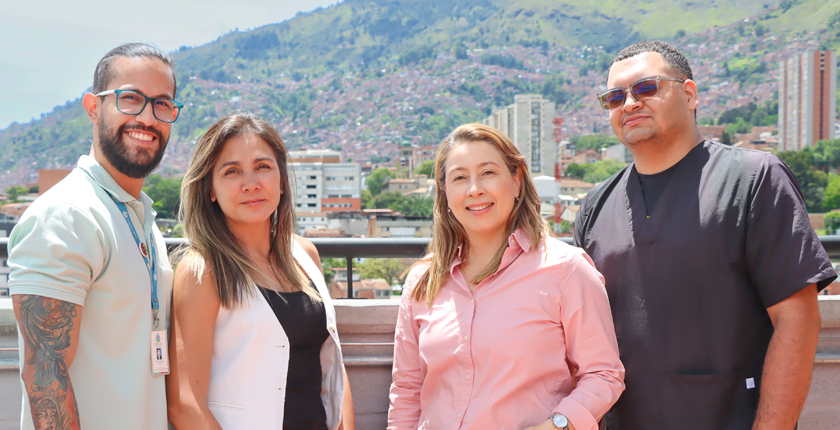
Our institution celebrates a significant achievement in both scientific research and social impact with the publication of the article “Embodiment, Bodily Practices, and the Construction of Health Among Victims of the Colombian Armed Conflict” in the prestigious journal Athenea Digital. Journal of Social Thought and Research (Vol. 26, No. 2).
Developed by researchers Santiago Londoño Echavarría (alumnus) and faculty members Jhon F. Santos, Ana María Pérez Naranjo, and Marleny Arcila Aristizábal, the study explores how victims of the armed conflict reconstruct their perceptions of health, well-being, and social connectedness through the body and bodily practices. The publication of this work in a high-impact international journal highlights the commitment of our academic community to understanding some of the most complex social realities affecting Colombia.
The strength and analytical depth of this publication stem from the interdisciplinary approach adopted by the research team, fostering meaningful collaboration between the Faculty of Health Sciences and the Faculty of Business Sciences. By integrating perspectives on physical well-being and healthcare with strategic and social approaches to organizational development, the researchers achieved a comprehensive understanding of the phenomenon under study.
This collaborative effort demonstrates that the challenges associated with post-conflict recovery, social reconstruction, and comprehensive reparation in Colombia cannot be addressed from a single disciplinary perspective. Instead, they require cooperation, dialogue, and the integration of diverse fields of knowledge.
This scientific achievement is closely aligned with the institution’s mission. From the perspectives of research and teaching, the article strengthens the visibility and impact of our scientific production while serving as a valuable academic resource for discussions on public health, social sciences, and community development. Likewise, its findings contribute directly to extension and social outreach activities by providing theoretical and methodological tools that can support the design of public policies, community intervention programs, and territorial reparation strategies.
Through contributions such as this, Fundación Universitaria María Cano reaffirms its commitment to generating knowledge with a profoundly human, transformative, and socially relevant purpose, contributing to memory, reconciliation, and the construction of a more equitable society.
To read the full article, click here.
#MásMaríaCano