
Blog
When the Territory Becomes a Classroom: Public Health Students Strengthen Their Intercultural Perspective in Silvia, Cauca
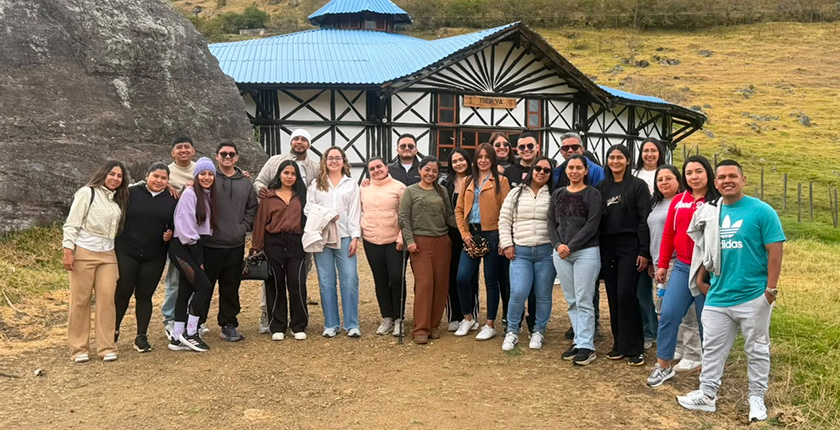
How can we understand a community’s health needs without knowing its territory, culture, and the knowledge that shapes its history? This question guided the academic experience of students from the eighth cohort of the Public Health Specialization at Fundación Universitaria María Cano, who explored the social and cultural realities of the municipality of Silvia, Cauca.
During the experience, students visited Sierra Morena and Casa Payán, spaces that allowed them to gain a closer understanding of the territory’s social and cultural dynamics and to recognize the ancestral knowledge that forms an essential part of the communities’ identity. More than a field visit, it was an opportunity to understand that addressing health also means listening, observing, and recognizing the particular characteristics of each context.
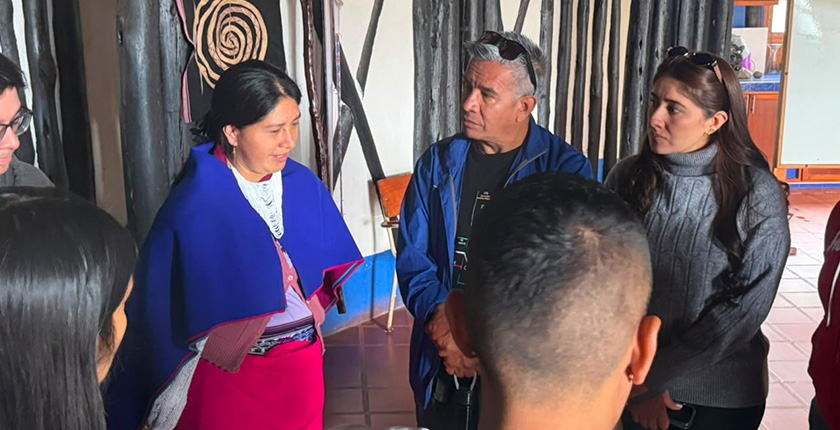
The experience strengthened students’ learning in Public Health and interculturality, as well as in the social and cultural determinants of health. Living conditions, cultural practices, ancestral knowledge, and the ways in which each community understands and cares for its well-being are essential elements for analyzing health realities and developing relevant responses.
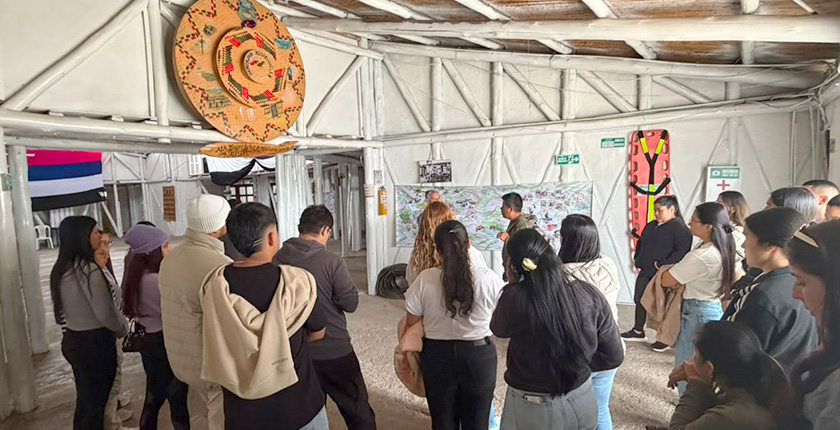
This approach to the territory complemented academic training with a more comprehensive perspective, in which knowledge gains meaning when it engages in dialogue with the realities of communities. In this way, students strengthened their ability to understand diverse contexts and embraced the challenge of contributing to Public Health that is more relevant, responsive, and respectful of cultural particularities.
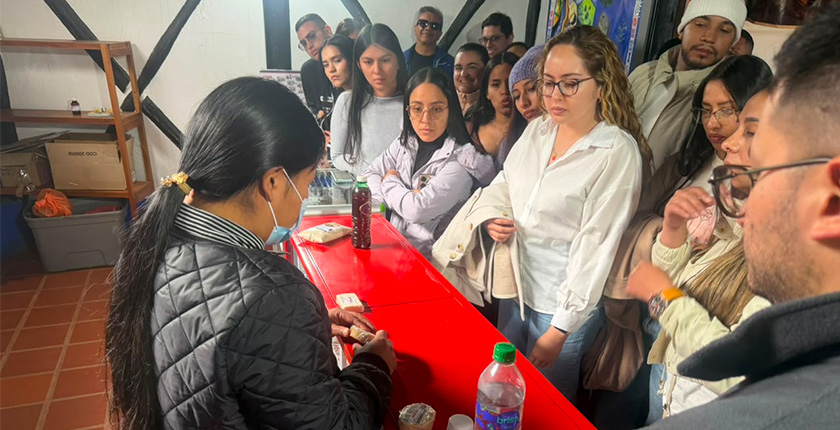
For Fundación Universitaria María Cano, experiences such as this are part of an educational approach that goes beyond the classroom and connects learning with the realities of the country. They also help prepare professionals capable of understanding that every territory has its own voices, needs, and knowledge—and that recognizing them is the first step toward contributing to meaningful transformation.
Because learning from the territory also means learning to build Public Health that listens, understands, and transforms.
#MásMaríaCano