
Blog
Obesity Does Not Progress the Same Way for Everyone
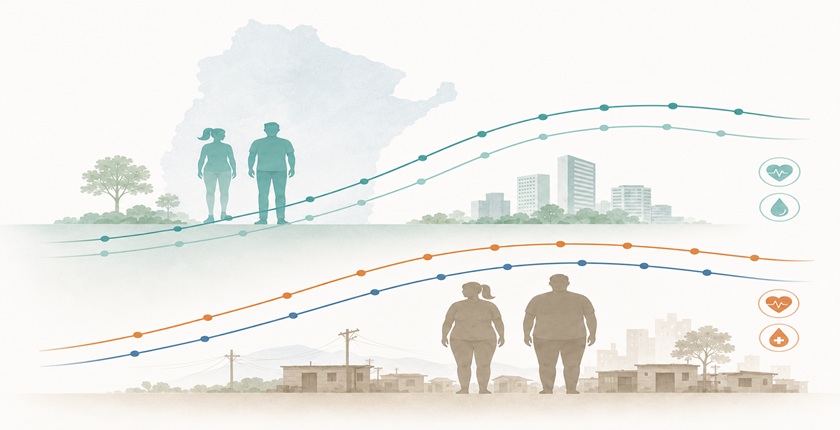
Obesity remains one of the most significant public health challenges worldwide due to its close association with chronic conditions such as type 2 diabetes, hypertension, and cardiovascular disease. However, an important question remains: does body weight increase in the same way for everyone throughout life?
To provide evidence on this issue, a study featured in the Research and Innovation in Health Sciences Journal (RIICS) analyzed the evolution of body mass index (BMI) in more than 126,000 Argentine adults using data collected between 2005 and 2018 through the National Risk Factor Surveys. Researchers examined how BMI changes with age and compared these trajectories according to sex, socioeconomic status, and the presence of hypertension or type 2 diabetes.
The findings revealed that BMI follows an age-related pattern: it gradually increases until reaching a peak value between 58 and 62 years of age and then begins to decline. However, the age at which this peak occurred and its magnitude varied across population groups. Women reached a lower peak BMI and at older ages than men, while individuals with lower socioeconomic status reached their peak earlier and with different BMI values compared to those with more favorable socioeconomic conditions. Distinct BMI trajectories were also observed among people living with hypertension or type 2 diabetes.
These results demonstrate that BMI evolution is influenced by factors such as sex, socioeconomic status, and the presence of chronic diseases associated with obesity. According to the authors, the findings support the importance of considering age, sex, and socioeconomic context when designing obesity prevention strategies and interventions aimed at reducing chronic disease risk.
The researchers also emphasize the need for longitudinal studies that can provide a deeper understanding of how these differences influence body weight progression and cardiometabolic health over time.
#MásMaríaCano